How to improve your pickleball backhand dink
Practise the backhand kitchen contact without stepping around every ball. A slow cooperative exchange lets you establish space beside the hip before you add depth or width.
Read the technique guide ↗Set up the feed.
Two partners at opposite kitchen lines start with gentle backhand-to-backhand bounce feeds. Agree a large kitchen target and keep the pace low enough for a short lift and recovery.
Cooperative backhand-to-backhand feeds across the kitchen. Use flat removable markers only with venue permission, outside footwork paths. Work in short sets and clear spare balls before changing positions.
Backhand dink movement study
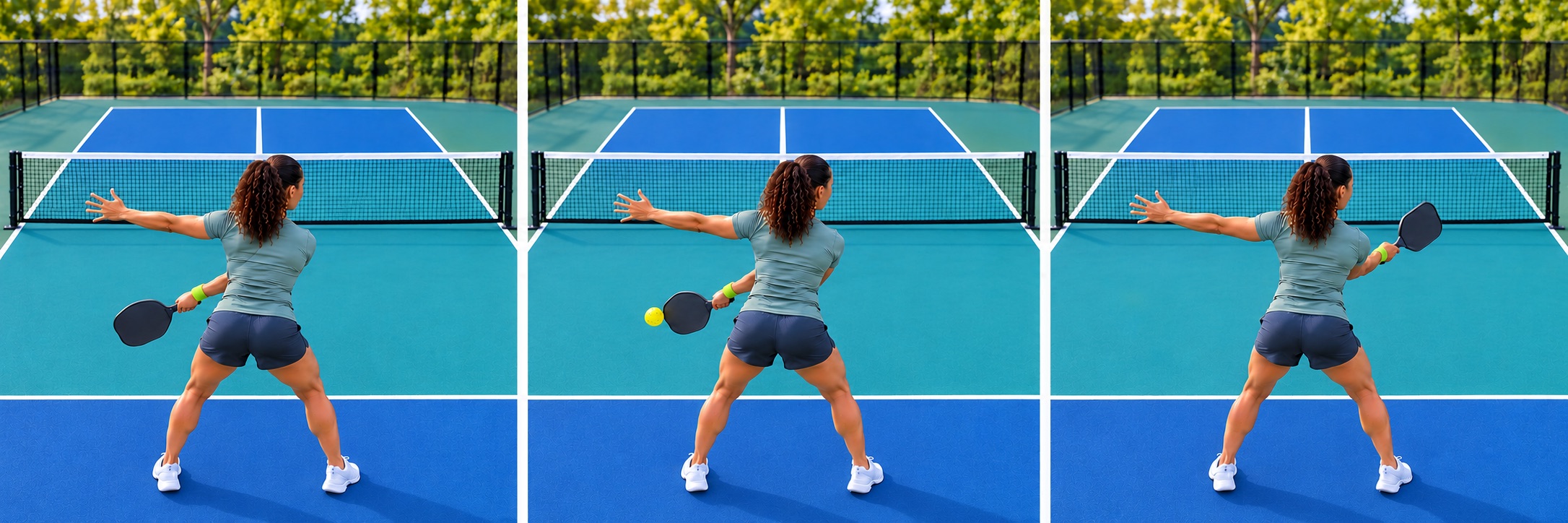
AI-generated movement study showing a fictional player from behind, facing the net. The lime band identifies the same right paddle wrist in every frame. Two-handed backhands add the bare left hand above the right on the handle. Use the written steps for technique and official rules for legality. Left-handed players reverse side-specific cues where appropriate.
Position, contact, recovery.
Where the movement starts
Play the bounced ball near the kitchen with space beside the backhand hip. Do not run around every backhand and leave a gap. Step into the kitchen for a bounce when useful, then recover legally before volleying.
Read the contact
In this one-handed illustration, the right arm crosses the body and the paddle contacts the ball on the player’s left. The free left hand remains separate. A compact lift is enough; avoid dragging the contact from behind the hip.
Check it with a partner
Have your partner send slow feeds to the same backhand window. Notice whether you can recover before the next feed. Once comfortable, add a deeper bounce and decide whether to let it bounce or take a legal volley.
Official court dimensions ↗Three rounds to build the skill.
Begin with the first round. Spend your practice block there if it is still challenging; completing all three is optional. Swap hitter and feeder roles after short sets and exclude unsuitable feeds from the attempt count.
- 01
Find the backhand window
Play ten suitable bounce contacts on the backhand side. Keep the same paddle hand and create space with your feet. Stop when the ball is behind you rather than dragging through a rescue stroke.
- 02
Recover before the next feed
Play ten more with the partner waiting for a balanced ready position. Gradually reduce the pause without raising the feed speed. Count placement and recovery separately.
- 03
Change one depth
Mix a slightly deeper dink into the same side. Choose whether to bounce it or take a legal volley. Retain a neutral target when you are stretched rather than forcing a sharp angle.
Record the task you actually did.
Record crowded and late contacts separately. If both keep happening, shorten the distance and slow the feed before trying to solve everything with a wrist adjustment.
For the linked Matchday drill, count: backhand dinks landing in the chosen kitchen zone. Save actual attempts, successes and minutes, then name the round, feed, target and variation in your notes. For decision-only or shadow work, leave attempt counts blank rather than inventing target hits.
Log completed practice in Matchday ↗Sign in to save. Existing Free and Pro practice-log allowances apply; reading and training remain free.Make the challenge fit.
Start easier: Shorten the distance and use gentle hand feeds.
Build the task: Alternate backhand middle and cross-court placement.
Keep the target definition fixed when comparing sets. Original practice design from BracketReady, with technique context in Build a backhand dink you trust and USA Pickleball · dink strategy ↗. Use the current official rules ↗ for legality.