How to improve your pickleball punch volley
Add a measured backhand punch to a ball that permits it. The feeder should help you recognise when a block is the better option rather than reward a big swing at every volley.
Read the technique guide ↗Set up the feed.
Both players remain outside the kitchen. Begin with moderate feeds to a comfortable backhand contact in front of the body. Pick a broad target with margin inside the opposite court.
A partner feeds comfortable chest-height balls, with space and cooperative pace. Use flat removable markers only with venue permission, outside footwork paths. Work in short sets and clear spare balls before changing positions.
Compact volley movement study
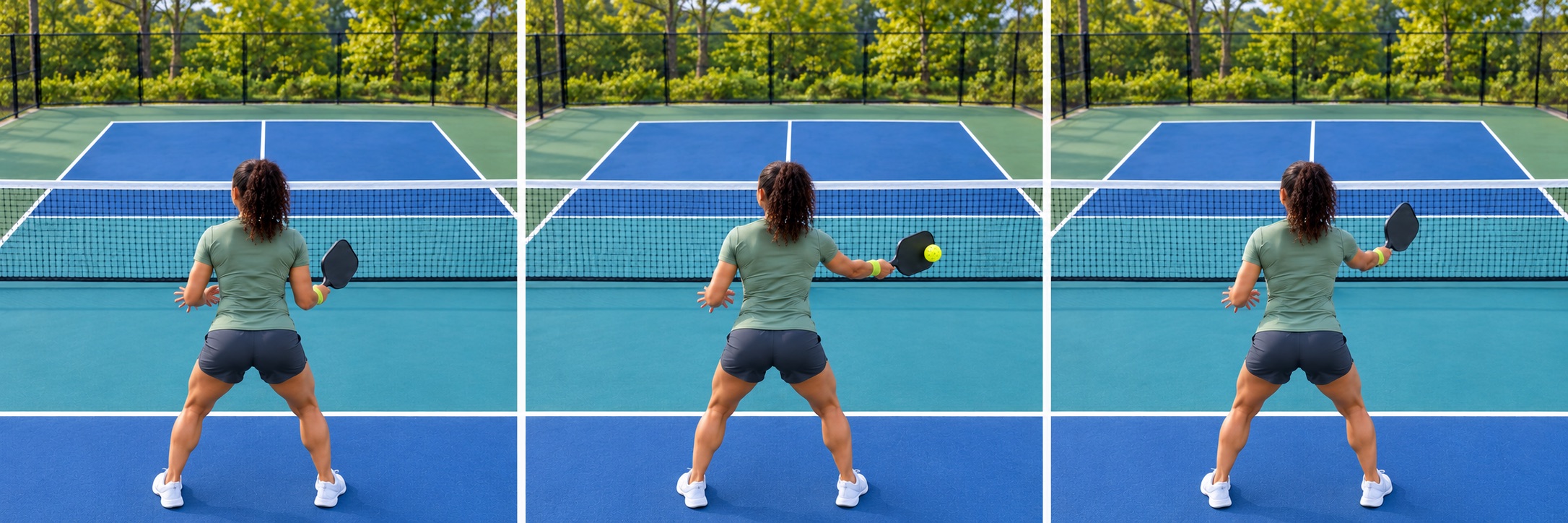
AI-generated movement study showing a fictional player from behind, facing the net. The lime band identifies the same right paddle wrist in every frame. Two-handed backhands add the bare left hand above the right on the handle. Use the written steps for technique and official rules for legality. Left-handed players reverse side-specific cues where appropriate.
Position, contact, recovery.
Where the movement starts
A volley is struck before the bounce. Keep feet, clothing, equipment and volley momentum clear of the kitchen and its line. Leave room behind the line for balance rather than leaning so far that recovery becomes a fault.
Read the contact
Prepare the paddle in front and meet a manageable ball with a short movement. This study shows a forehand contact; for a backhand punch, the same paddle hand crosses the body. Read the guide for the variation being practised.
Check it with a partner
Have a partner feed gently at first, then vary height. Choose a block for a hard low ball and a measured punch for a suitable higher one. Judge whether the paddle returns in time for the next contact, not only whether the first ball lands in.
Official court dimensions ↗Three rounds to build the skill.
Begin with the first round. Spend your practice block there if it is still challenging; completing all three is optional. Swap hitter and feeder roles after short sets and exclude unsuitable feeds from the attempt count.
- 01
Prepare the backhand face
Play ten backhand volleys with the same dominant hand across the body. Use a short forward movement and a stable face, avoiding a large backswing or locked elbow.
- 02
Place the punch
Aim ten suitable feeds towards the chosen broad target. Count placements followed by a quick paddle recovery. Reduce pace if the finish leaves you unable to respond.
- 03
Choose block or punch
The feeder mixes firmer low balls with manageable higher ones. Call block or punch and act on the choice. Judge the decision before the final bounce so an accidental winner does not distort the lesson.
Record the task you actually did.
Track appropriate choices and placements separately. If the hitter needs a shoulder-sized swing, return to slower feeds and shorten the action.
For the linked Matchday drill, count: punch volleys reaching the target with paddle recovery. Save actual attempts, successes and minutes, then name the round, feed, target and variation in your notes. For decision-only or shadow work, leave attempt counts blank rather than inventing target hits.
Log completed practice in Matchday ↗Sign in to save. Existing Free and Pro practice-log allowances apply; reading and training remain free.Make the challenge fit.
Start easier: Use slower predictable backhand feeds.
Build the task: Mix a low feed that requires a block with a higher punch opportunity.
Keep the target definition fixed when comparing sets. Original practice design from BracketReady, with technique context in Use a compact punch volley with a clear target and USA Pickleball · backhand punch volley ↗. Use the current official rules ↗ for legality.