How to improve your pickleball serve
Build a serve you can trust at the start of a close game. This partner session separates a legal, repeatable start from the temptation to chase speed. Keep the target broad enough to show whether your routine is working.
Read the technique guide ↗Set up the feed.
The server works behind one baseline. The partner receives diagonally, lets each serve bounce, calls short, target, wide or long, and collects only after the server stops.
Use a broad deep target with clear space inside the baseline and sideline. Use flat removable markers only with venue permission, outside footwork paths. Work in short sets and clear spare balls before changing positions.
Volley-serve movement study
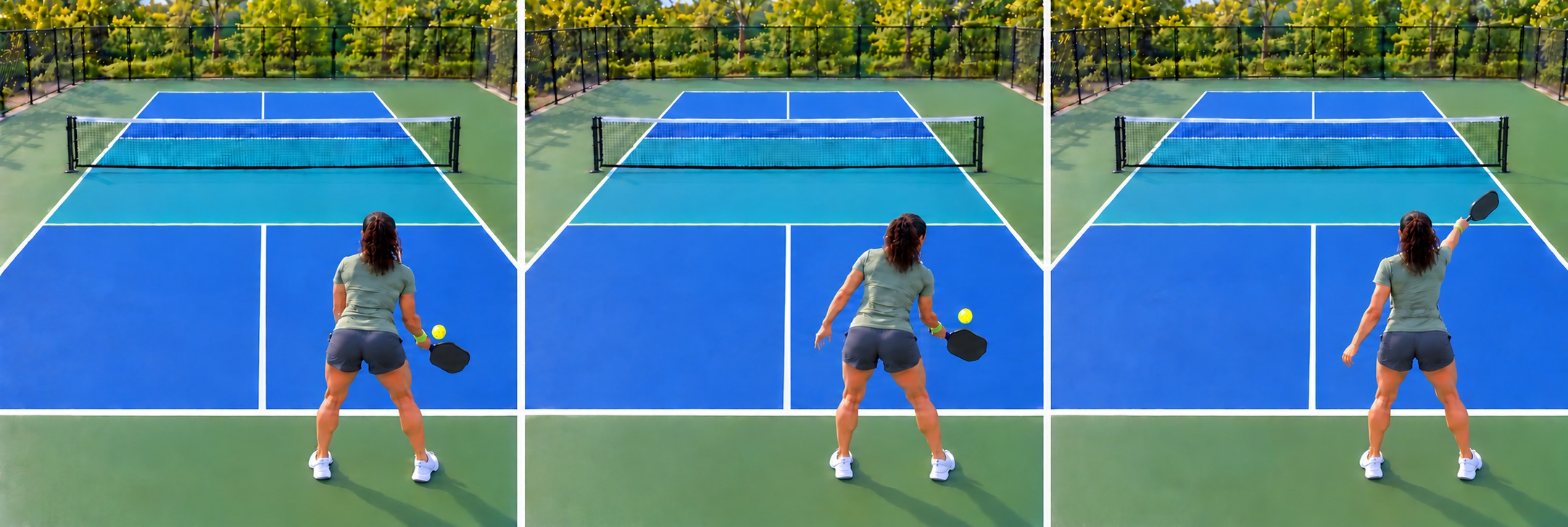
AI-generated movement study showing a fictional player from behind, facing the net. The lime band identifies the same right paddle wrist in every frame. Two-handed backhands add the bare left hand above the right on the handle. Use the written steps for technique and official rules for legality. Left-handed players reverse side-specific cues where appropriate.
Position, contact, recovery.
Where the movement starts
Start behind the baseline, between the imaginary extensions of the centreline and sideline. The diagonal service box is the target. The kitchen and its line are short of the legal service landing area; leave a generous margin beyond them.
Read the contact
For a volley serve, meet the released ball below the waist with an upward arm motion and paddle head below the wrist at contact. Keep the paddle in your dominant hand throughout; the other hand releases the ball.
Check it with a partner
Have a partner observe from the side for contact height and from behind for foot position. These photographs show the general motion, not a service-legality measurement. After serving, stay back long enough to let the return bounce.
Official court dimensions ↗Three rounds to build the skill.
Begin with the first round. Spend your practice block there if it is still challenging; completing all three is optional. Swap hitter and feeder roles after short sets and exclude unsuitable feeds from the attempt count.
- 01
Find the routine
Take ten moderate serves to one broad diagonal box. Use the same pause, release and contact intention. Do not change your motion after every miss; first notice whether the misses have a pattern.
- 02
Change the service side
Swap left and right service positions for ten more serves. The target remains comfortably beyond the kitchen and inside the sideline. Change the diagonal, not the pace.
- 03
Add the return
Play ten serve-return starts. The partner returns cooperatively; the server lets that return bounce before the next shot. Record the serve result before playing out the rally.
Record the task you actually did.
Compare target hits with total serves, separating net, short, wide and long misses. If the routine changes under pressure, repeat the first round before adding pace.
For the linked Matchday drill, count: legal serves landing in the chosen diagonal target. Save actual attempts, successes and minutes, then name the round, feed, target and variation in your notes. For decision-only or shadow work, leave attempt counts blank rather than inventing target hits.
Log completed practice in Matchday ↗Sign in to save. Existing Free and Pro practice-log allowances apply; reading and training remain free.Make the challenge fit.
Start easier: Aim for the whole legal service box at an easy pace.
Build the task: Vary depth deliberately while keeping the same routine.
Keep the target definition fixed when comparing sets. Original practice design from BracketReady, with technique context in Build a repeatable underhand volley serve and USA Pickleball · serve tips ↗. Use the current official rules ↗ for legality.