Build your third-shot drop from the kitchen backwards
Learn soft forehand drop contact, a useful arc and a patient approach from baseline to kitchen.
Understand the job.
The drop aims to land softly in the opposing kitchen so you can improve your position. It is a longer soft shot, not a guarantee that opponents must let it bounce. They may volley a high drop, so judge its quality before moving.
Drop-shot movement study
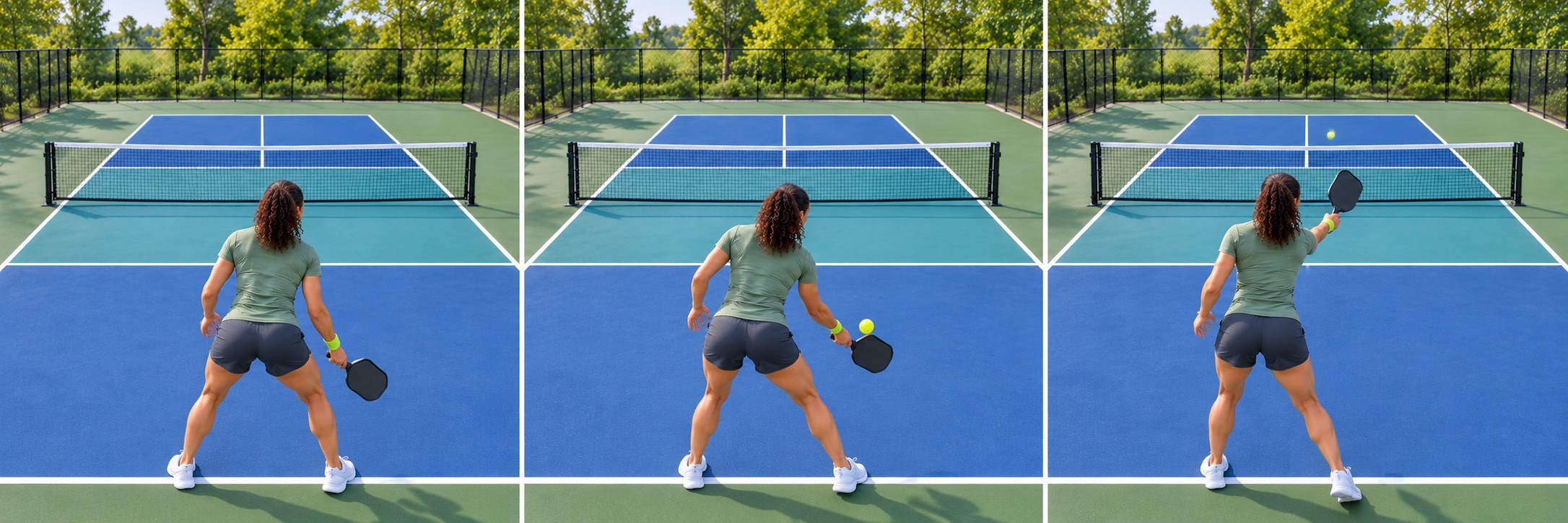
AI-generated movement study showing a fictional player from behind, facing the net. The lime band identifies the same right paddle wrist in every frame. Two-handed backhands add the bare left hand above the right on the handle. Use the written steps for technique and official rules for legality. Left-handed players reverse side-specific cues where appropriate.
Position, contact, recovery.
Where the movement starts
The illustrated drop starts from the back court, with the blue service area and kitchen between player and net. The intended landing area is the opponent’s kitchen, rather than a short ball on your own side.
Read the contact
Meet a suitable bounce in front with a quiet low-to-high path and a controlled face angle. Let the ball travel with an arc; trying to skim the tape leaves little margin. Keep the dominant hand on the paddle through the lift.
Check it with a partner
Start closer to the kitchen and work backwards as control improves. Ask your partner whether they can attack the incoming ball, not only whether it bounces in the kitchen. Advance with your partner when the reply allows time, then settle before contact.
Official court dimensions ↗Step by step.
- 01
Start with a short distance
Begin near the kitchen and play a controlled soft bounce shot. Move back in stages while retaining a compact preparation and a comfortable contact in front.
- 02
Give the ball usable shape
Guide the ball upward with enough arc to clear the net and descend into the kitchen. Avoid measuring success only by how closely it passes the tape.
- 03
Read before advancing
Move forward when your ball gives you time. Settle before the opponent contacts it. If the drop sits high, prepare to defend from your current position instead of running into their attack.
When it goes wrong.
Trying to solve distance with a huge swing
Move back gradually and retain the soft contact.
Charging on every third shot
Advance according to the actual reply you have created.
Practise this with a partner.
The feeder stands near the opposite kitchen line and sends a repeatable bounce. The hitter begins nearer the kitchen, then retreats in comfortable steps as control allows.
Start here: Play ten drops from a shorter distance to a broad opposing kitchen target. Use enough arc and a quiet finish. The feeder calls soft, attackable or missed before collecting.
Open all three rounds, a solo option and four-player rotation ↗Drop-distance ladder
A suggested BracketReady practice task. The counts are your observations, not a skill-rating test.
Set it up
A cooperative partner at the opposite kitchen line; three starting distances on your side.
Do the work
Play 10 drops from each distance. Count balls landing in a generous kitchen target. Move back only when the current distance feels repeatable; your target is a baseline, not a pass grade.
Count this
Drops landing in the chosen kitchen target. Record attempts and target hits using the same definition throughout.
Log this practice in Matchday ↗Sign in to save. Existing practice-log allowances apply. Log sessions you actually completed.Make it fit your level.
Stay near the kitchen with gentle feeds.
Have the partner volley an attackable drop and continue the point.
Add a return of serve before the baseline drop.
Know what you are reading.
Original BracketReady explanation and practice design from the BracketReady learning desk, with the technique reference below. For individual technique feedback, work with a qualified coach.
Photo sequences use a consistent fictional player, wardrobe, equipment and court. Some guides share a relevant movement study; the written lesson explains the specific variation.
References checked 23 October 2026. Event rules and official updates take precedence.
Your next useful read.
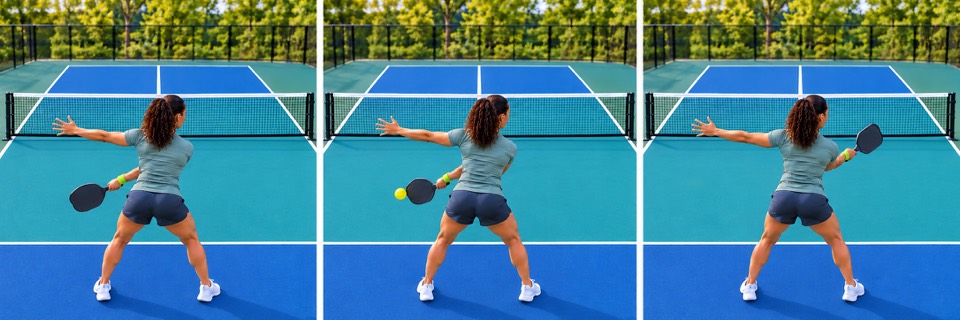
Give the backhand drop its own practice time
Develop a compact backhand drop so deep returns do not force you to run around every ball.
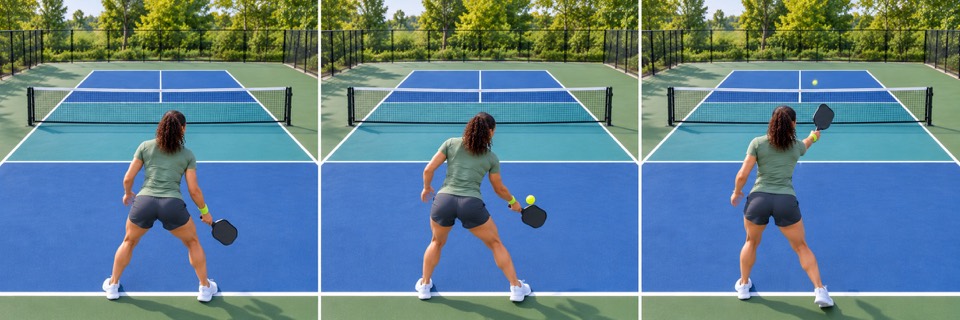
Third shot: choose a drive or a drop
Read the bounce, your balance and the opponents’ position before choosing pace or a soft approach.
Use the fifth shot to finish your approach
Connect a controlled third-shot drive, a readable block and a softer fifth without outrunning the point.