How to improve your pickleball reset
Learn to reduce pace from the transition area and make the opponent play up. Start with feeds that permit a quiet contact before you add movement or a harder drive.
Read the technique guide ↗Set up the feed.
The feeder works from the opposite kitchen at moderate speed. The hitter begins midway between baseline and kitchen with the line ahead. Agree that the feeder will restart any unsuitable ball.
A partner at the kitchen gives manageable feeds to a player in transition. Use flat removable markers only with venue permission, outside footwork paths. Work in short sets and clear spare balls before changing positions.
Reset movement study
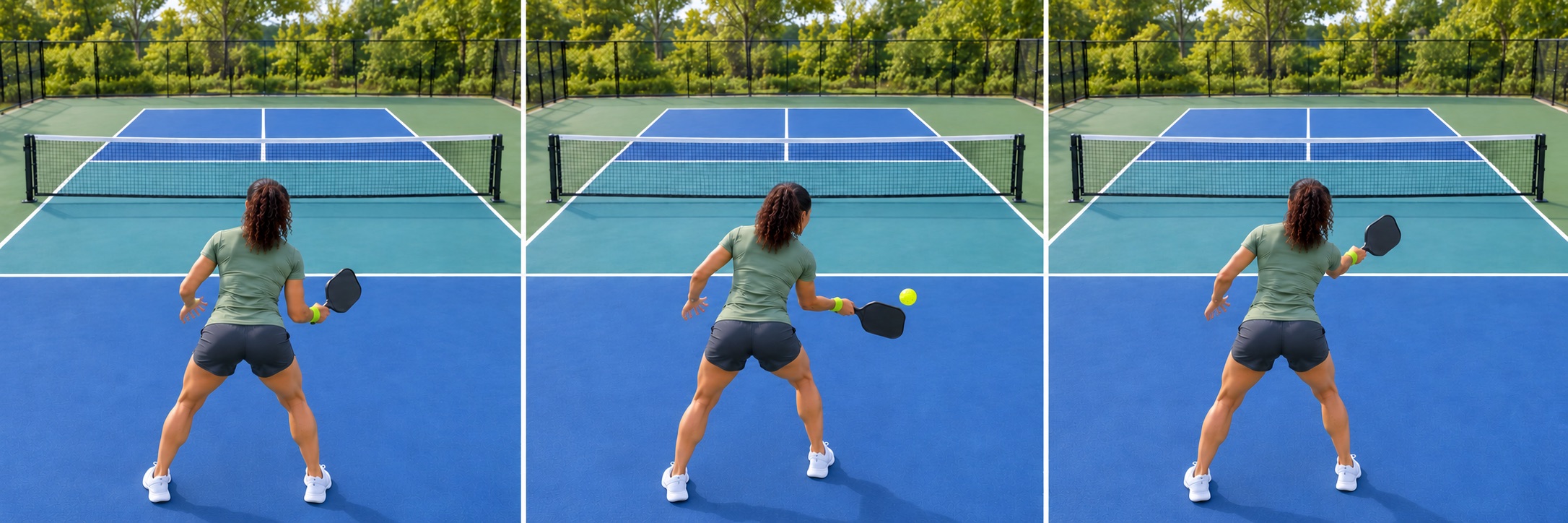
AI-generated movement study showing a fictional player from behind, facing the net. The lime band identifies the same right paddle wrist in every frame. Two-handed backhands add the bare left hand above the right on the handle. Use the written steps for technique and official rules for legality. Left-handed players reverse side-specific cues where appropriate.
Position, contact, recovery.
Where the movement starts
A reset can be useful between baseline and kitchen when the incoming ball is too low or fast for a comfortable attack. Keep the kitchen line and net ahead, with enough time to balance before the opponent hits.
Read the contact
Put the paddle into the contact window early and absorb pace with a quiet face. The finish is smaller than a drive. Choose a soft ball that makes the opponent hit up; do not force a winner from below net height.
Check it with a partner
Begin with manageable feeds and count replies that cannot be comfortably attacked. Distinguish a low contact that needs a reset from a higher ball that offers another option. Movement and the incoming pace matter as much as grip pressure.
Official court dimensions ↗Three rounds to build the skill.
Begin with the first round. Spend your practice block there if it is still challenging; completing all three is optional. Swap hitter and feeder roles after short sets and exclude unsuitable feeds from the attempt count.
- 01
Set a quiet face
Receive ten predictable low feeds. Put the paddle in place early and soften the reply into the opposing kitchen. Keep the finish small and restore balance after every attempt.
- 02
Change the incoming pace
Alternate gentle and firmer feeds for ten contacts. Let the incoming speed influence the amount of absorption. Avoid using the same push on every ball just to reach the net.
- 03
Add transition movement
Start farther back, play a soft reply and gain a little ground while there is time. Settle before the next feed. Count a reset only when its quality also leaves you ready for the reply.
Record the task you actually did.
Separate net misses, high attackable replies and soft neutral balls. Note the feed pace so a later easier session does not look like an unexplained improvement.
For the linked Matchday drill, count: resets landing in the chosen kitchen zone. Save actual attempts, successes and minutes, then name the round, feed, target and variation in your notes. For decision-only or shadow work, leave attempt counts blank rather than inventing target hits.
Log completed practice in Matchday ↗Sign in to save. Existing Free and Pro practice-log allowances apply; reading and training remain free.Make the challenge fit.
Start easier: Move closer and reduce incoming speed.
Build the task: Continue after the reset and advance only when the ball allows.
Keep the target definition fixed when comparing sets. Original practice design from BracketReady, with technique context in Reset the rally without adding more pace and USA Pickleball · reset technique ↗. Use the current official rules ↗ for legality.