Reset the rally without adding more pace
Practise a relaxed, compact defensive contact and recover from the transition zone.
Understand the job.
A reset aims to soften an attacking ball into the kitchen and make the next exchange more manageable. It is valuable when you cannot comfortably counter. Learn it first from gentle feeds before asking a partner for harder attacks.
Reset movement study
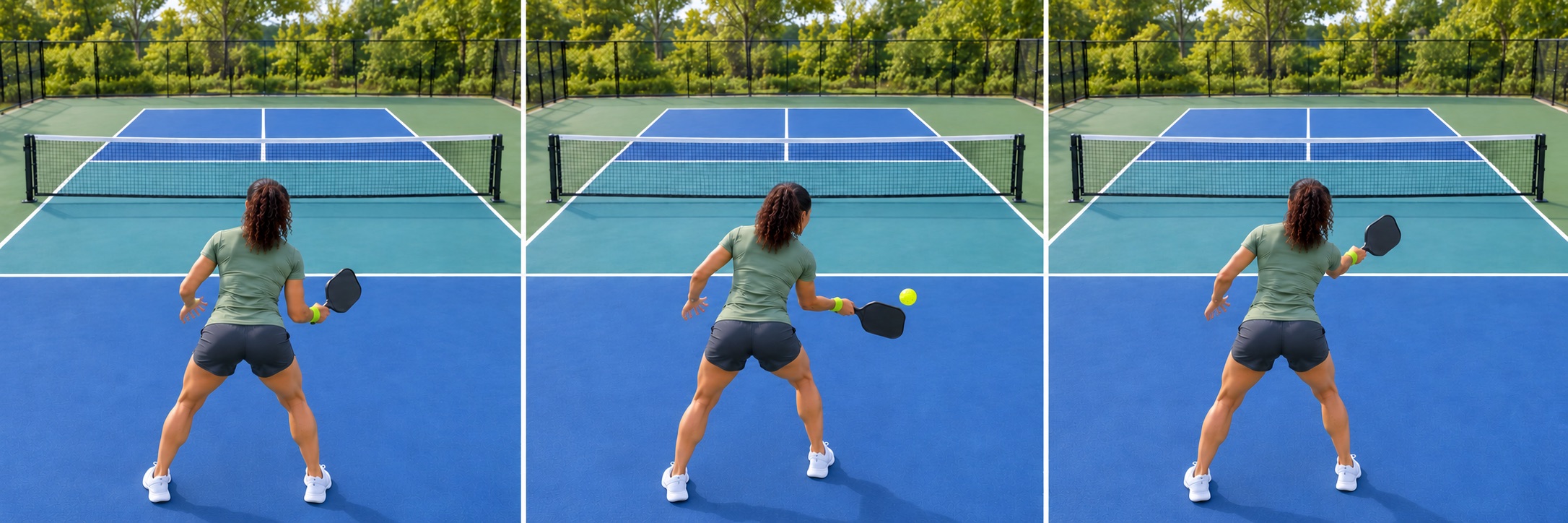
AI-generated movement study showing a fictional player from behind, facing the net. The lime band identifies the same right paddle wrist in every frame. Two-handed backhands add the bare left hand above the right on the handle. Use the written steps for technique and official rules for legality. Left-handed players reverse side-specific cues where appropriate.
Position, contact, recovery.
Where the movement starts
A reset can be useful between baseline and kitchen when the incoming ball is too low or fast for a comfortable attack. Keep the kitchen line and net ahead, with enough time to balance before the opponent hits.
Read the contact
Put the paddle into the contact window early and absorb pace with a quiet face. The finish is smaller than a drive. Choose a soft ball that makes the opponent hit up; do not force a winner from below net height.
Check it with a partner
Begin with manageable feeds and count replies that cannot be comfortably attacked. Distinguish a low contact that needs a reset from a higher ball that offers another option. Movement and the incoming pace matter as much as grip pressure.
Official court dimensions ↗Step by step.
- 01
Make a stable contact area
Keep the paddle in front and lower your base through a comfortable range. Organise your feet early enough to avoid a large running swing.
- 02
Cushion the ball
Use a relaxed grip and almost no backswing. Guide the face towards a generous kitchen target, letting the incoming pace do much of the work. Avoid stabbing at the ball.
- 03
Assess before moving
Watch whether the reset stays low enough to improve the next position. Advance if it gives time; otherwise stay ready to defend and reset again.
When it goes wrong.
Tightening the hand when attacked
Slow the feed and rehearse a quiet rebound before adding pace.
Swinging harder to escape pressure
Keep the motion short and choose a larger soft target.
Practise this with a partner.
The feeder works from the opposite kitchen at moderate speed. The hitter begins midway between baseline and kitchen with the line ahead. Agree that the feeder will restart any unsuitable ball.
Start here: Receive ten predictable low feeds. Put the paddle in place early and soften the reply into the opposing kitchen. Keep the finish small and restore balance after every attempt.
Open all three rounds, a solo option and four-player rotation ↗Transition reset baseline
A suggested BracketReady practice task. The counts are your observations, not a skill-rating test.
Set it up
A partner at the kitchen gives manageable feeds to a player in transition.
Do the work
Receive 20 feeds. Count resets into a broad kitchen zone, then recover the paddle after every contact. Keep the feed speed consistent in your notes.
Count this
Resets landing in the chosen kitchen zone. Record attempts and target hits using the same definition throughout.
Log this practice in Matchday ↗Sign in to save. Existing practice-log allowances apply. Log sessions you actually completed.Make it fit your level.
Move closer and reduce incoming speed.
Continue after the reset and advance only when the ball allows.
Vary the feed between the forehand and backhand.
Know what you are reading.
Original BracketReady explanation and practice design from the BracketReady learning desk, with the technique reference below. For individual technique feedback, work with a qualified coach.
Photo sequences use a consistent fictional player, wardrobe, equipment and court. Some guides share a relevant movement study; the written lesson explains the specific variation.
References checked 23 October 2026. Event rules and official updates take precedence.
Your next useful read.
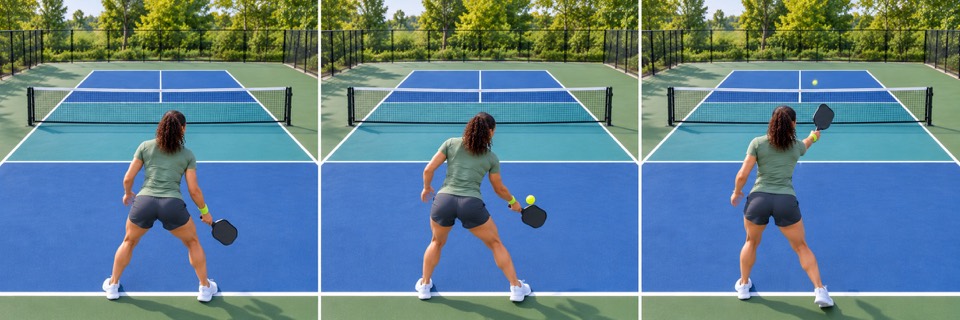
Build your third-shot drop from the kitchen backwards
Learn soft forehand drop contact, a useful arc and a patient approach from baseline to kitchen.
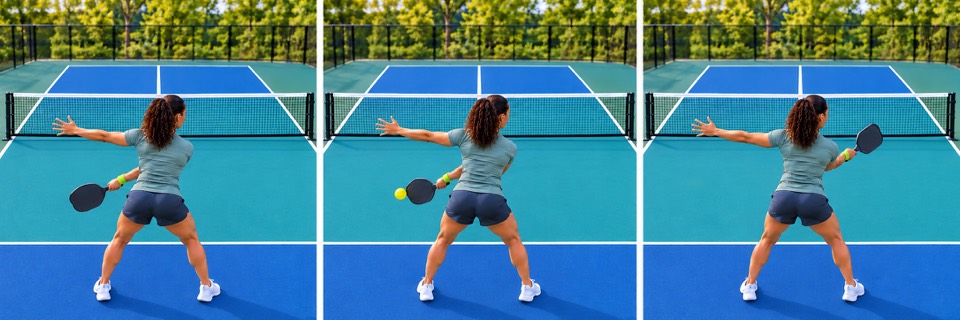
Give the backhand drop its own practice time
Develop a compact backhand drop so deep returns do not force you to run around every ball.
Third shot: choose a drive or a drop
Read the bounce, your balance and the opponents’ position before choosing pace or a soft approach.