Test competitive patterns with real observations
Build an opponent-specific hypothesis, rehearse the reply and review a useful sample with your partner or coach.
Understand the job.
At a high level, an established stroke still needs the right situation. Treat scouting as a hypothesis about observable behaviour. A rating or one result does not reveal handedness, technical weaknesses or what an opponent will do today.
Ready-position movement study
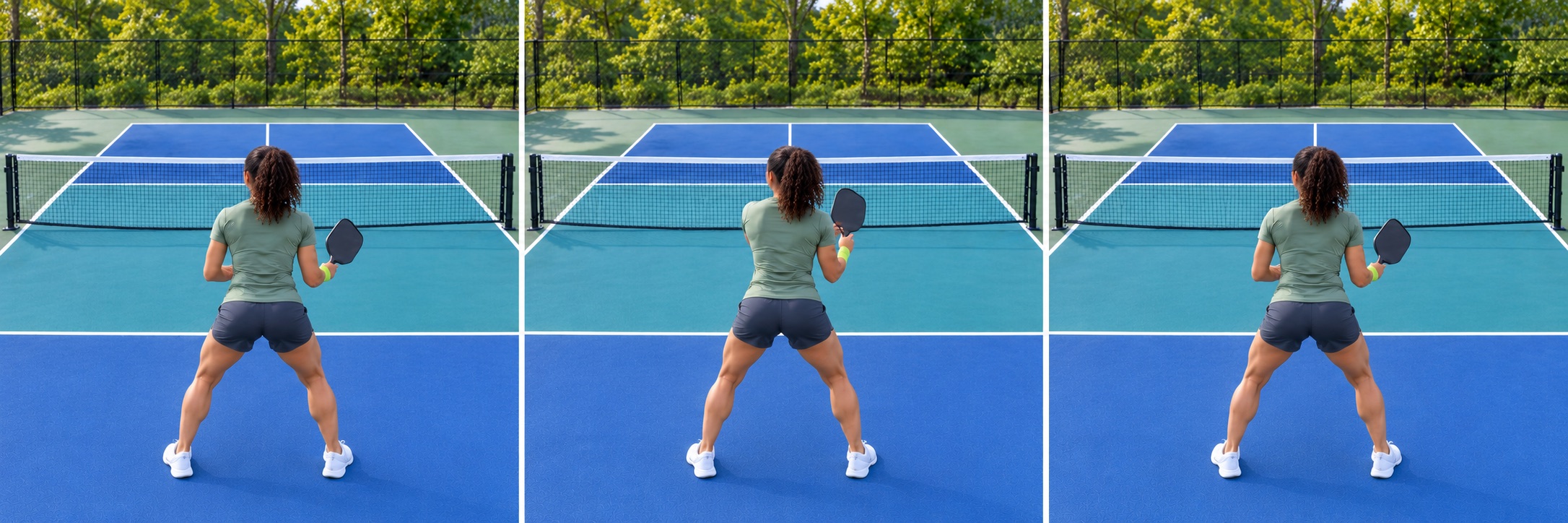
AI-generated movement study showing a fictional player from behind, facing the net. The lime band identifies the same right paddle wrist in every frame. Two-handed backhands add the bare left hand above the right on the handle. Use the written steps for technique and official rules for legality. Left-handed players reverse side-specific cues where appropriate.
Position, contact, recovery.
Where the movement starts
Face the net with room to move either way. At the kitchen, leave your shoes clear of the non-volley-zone line. A ready stance at the baseline can be lower and wider; do not copy one fixed paddle height for every situation.
Read the contact
Keep the paddle in the same dominant hand. A light touch from the other hand may support preparation without changing which hand grips the handle. Start with a comfortable handshake hold, then use gentle feeds to test both sides.
Check it with a partner
Ask a partner to alternate sides without warning. If you first have to untuck the paddle or uncross your feet, adjust your starting position. Readiness is the ability to respond, rather than a pose held for a photograph.
Official court dimensions ↗Step by step.
- 01
Write an observable hypothesis
Use a specific pattern such as “our deep middle return gives us time to settle”. State what you expect to see and what would suggest the pattern is not helping.
- 02
Rehearse the second and third replies
Use live partners who can vary their responses. Practise the first action, the common counter and a neutral escape. Include your partner’s coverage responsibilities.
- 03
Review the sample honestly
Log opportunities, decisions and outcomes separately. Note opponent quality and conditions. Use video only where recording and sharing are permitted, and review difficult technical choices with a qualified coach.
When it goes wrong.
Calling a pattern proven after two winners
Look for repeated opportunities and plausible alternative explanations.
Preparing only the opening attack
Include the counter and your recovery.
Pattern hypothesis game
A suggested BracketReady practice task. The counts are your observations, not a skill-rating test.
Set it up
Four players and one written pattern with an agreed observation.
Do the work
Create 20 suitable rally starts. Count opportunities where the pattern produces the intended next position, then discuss the failures without changing the definition afterwards.
Count this
Pattern opportunities producing the intended next position. Record attempts and target hits using the same definition throughout.
Log this practice in Matchday ↗Sign in to save. Existing practice-log allowances apply. Log sessions you actually completed.Make it fit your level.
Begin from a predictable opening feed.
Mix openings so the pattern must be recognised during live play.
Test the same pattern against a different pair.
Know what you are reading.
Original BracketReady explanation and practice design from the BracketReady learning desk, with the technique reference below. For individual technique feedback, work with a qualified coach.
Photo sequences use a consistent fictional player, wardrobe, equipment and court. Some guides share a relevant movement study; the written lesson explains the specific variation.
References checked 23 October 2026. Event rules and official updates take precedence.
Your next useful read.
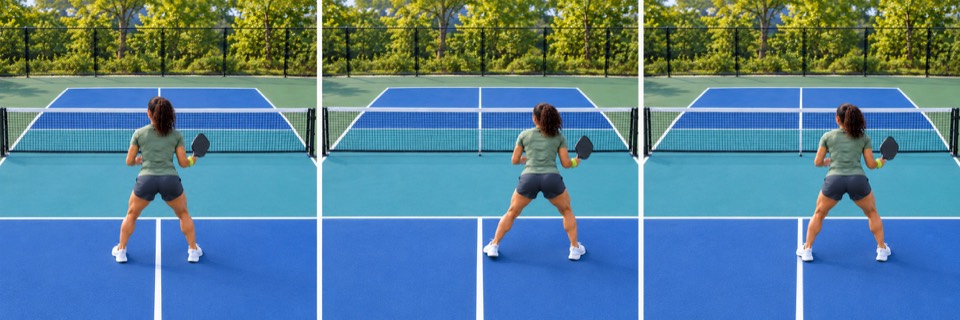
Move as a doubles team, not two separate players
Connect serve, return, transition and kitchen coverage with your partner’s actual position.
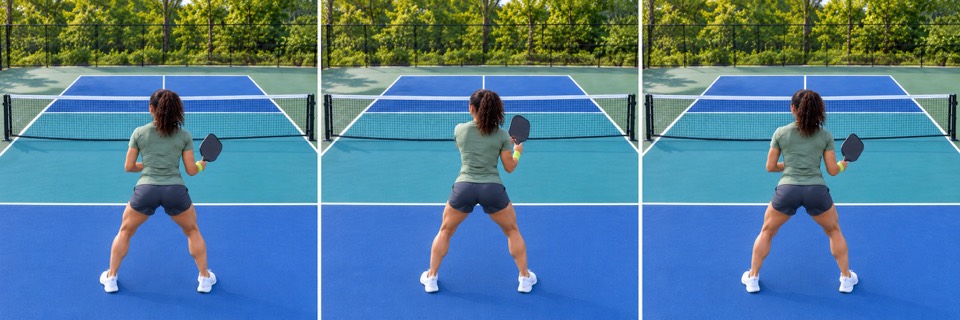
Agree who takes the middle before it matters
Replace last-second guessing with clear partnership calls and a plan for different contact positions.
Learn stacking without losing the correct server
Rehearse preferred-side movement, legal starting responsibilities and an organised return position.