Use a lob with a reason and room
Explore an offensive or defensive lob with controlled lift, a realistic target and recovery for the reply.
Understand the job.
A lob sends the ball high over an opponent. It may create an attacking opportunity or buy defensive time, but a short lob can invite an overhead. Consider the opponent’s position, reach and the wind before using it.
Lob movement study
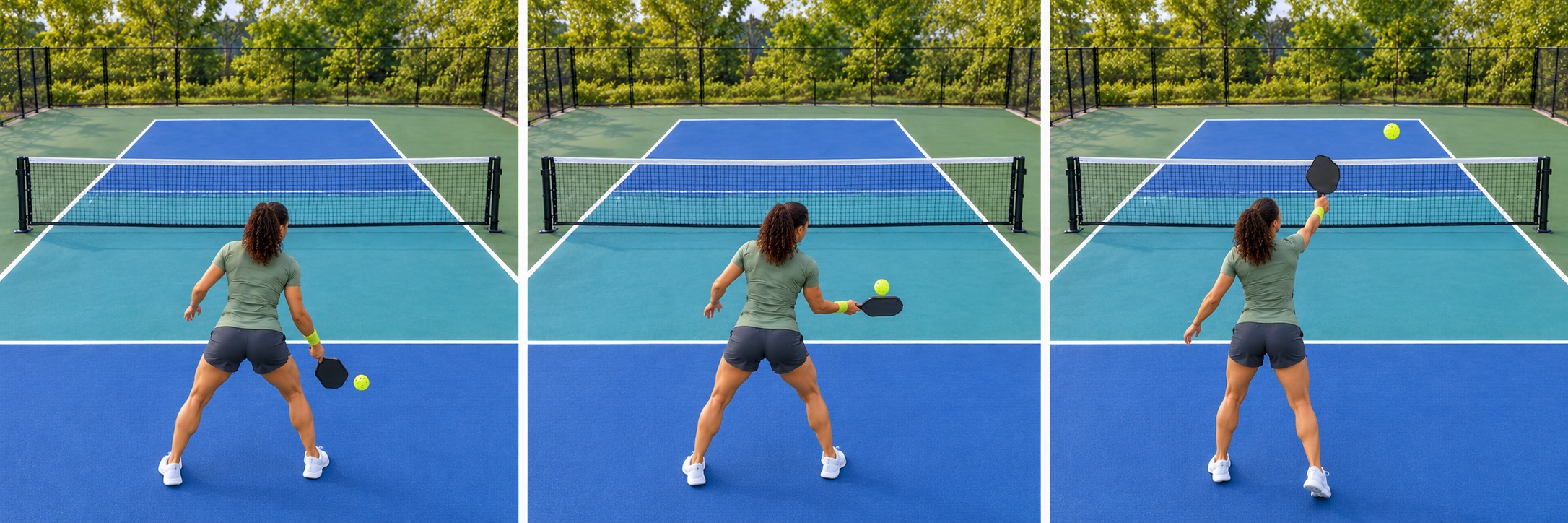
AI-generated movement study showing a fictional player from behind, facing the net. The lime band identifies the same right paddle wrist in every frame. Two-handed backhands add the bare left hand above the right on the handle. Use the written steps for technique and official rules for legality. Left-handed players reverse side-specific cues where appropriate.
Position, contact, recovery.
Where the movement starts
Look for space behind the opponents while retaining room to play your own contact. A lob needs a landing margin inside the far baseline; height alone is not enough. Wind, opponent movement and their overhead ability change the choice.
Read the contact
From a suitable bounce, use a controlled upward-and-forward lift and keep the paddle in the same hand. This is different from the downward action of an overhead. Stay balanced so you can respond if the opponent reaches it.
Check it with a partner
Ask a partner to call whether the lob gives them a comfortable overhead. Track short lobs separately from long ones. If a lob passes over an opponent but lands out, count it as a miss rather than a successful tactical result.
Official court dimensions ↗Step by step.
- 01
Choose the situation
Look for an opponent close to the kitchen or a need for recovery time. Start from a ball you can contact in balance. Do not assume a rushed scoop will travel safely over an established overhead.
- 02
Guide a controlled lift
Use a slightly open face and a smooth upward path. Keep the contact in front and give the ball enough height without throwing the face open at the last instant.
- 03
Cover the likely reply
Watch whether the opponent can take an overhead or must turn. Move with your partner and keep a defensive answer ready when the lob is short.
When it goes wrong.
Lobbing without reading the wind
Observe the flight during warm-up and use a larger line margin.
Stopping after the lift
Recover and prepare for the actual reply.
Practise this with a partner.
The hitter starts near the kitchen. A partner gives a gentle bounce feed, then reports whether the lob is short, deep in, or long. Keep the feeding and landing areas clear.
Start here: Play ten lobs from comfortable forehand bounces to a generous deep target. Lift forward as well as upward. Track short and long misses separately.
Open all three rounds, a solo option and four-player rotation ↗Lob into a deep zone
A suggested BracketReady practice task. The counts are your observations, not a skill-rating test.
Set it up
A cooperative partner near the opposite kitchen; choose a generous deep landing zone.
Do the work
Play 20 controlled lobs from gentle bounce feeds. Count balls that clear your partner’s comfortable raised paddle and land in the chosen zone. No jumping contest.
Count this
Lobs clearing the agreed reach and landing in the target. Record attempts and target hits using the same definition throughout.
Log this practice in Matchday ↗Sign in to save. Existing practice-log allowances apply. Log sessions you actually completed.Make it fit your level.
Practise lift and depth without an opponent at the net.
Let the partner choose overhead or retrieval and continue the point.
Mix a dink and lob from the same gentle feed.
Know what you are reading.
Original BracketReady explanation and practice design from the BracketReady learning desk, with the technique reference below. For individual technique feedback, work with a qualified coach.
Photo sequences use a consistent fictional player, wardrobe, equipment and court. Some guides share a relevant movement study; the written lesson explains the specific variation.
References checked 23 October 2026. Event rules and official updates take precedence.
Your next useful read.
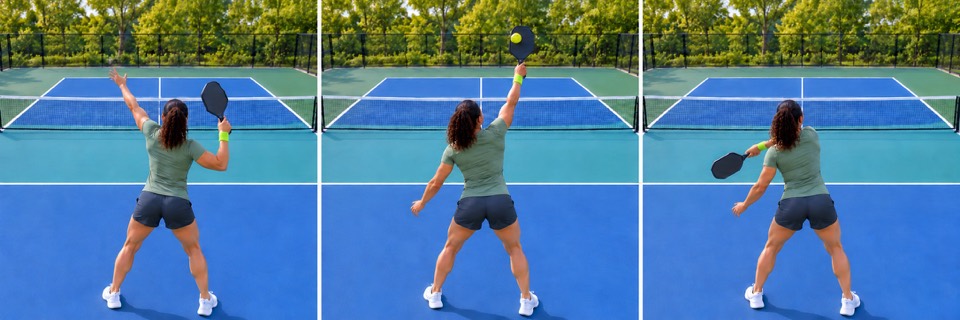
Place an overhead before adding power
Track a manageable high ball, turn into position and direct a balanced overhead to open court.
Retrieve a lob with an early turn and a clear call
Organise a safe recovery, partner coverage and a neutral reply when the ball goes over you.
Your first game: the rules that keep play flowing
Learn the two-bounce rule, kitchen, serving sequence and traditional scoring with a simple on-court rehearsal.