Keep a simple routine on pressure points
Use one intention, an agreed partner phrase and score-based practice without promising a mental shortcut.
Understand the job.
A pressure score often makes players rush a routine they already know. Rehearse a brief pause, a clear target and a shared call so you have something concrete to do. This is match preparation, not a psychological treatment or a guarantee of better results.
Ready-position movement study
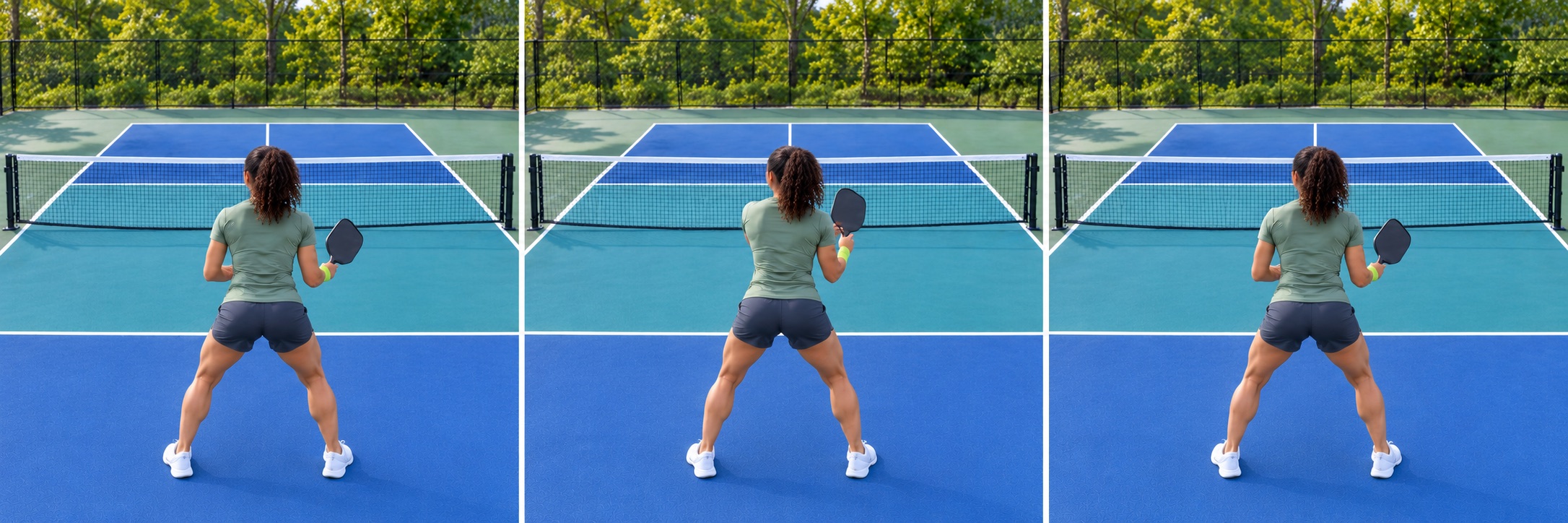
AI-generated movement study showing a fictional player from behind, facing the net. The lime band identifies the same right paddle wrist in every frame. Two-handed backhands add the bare left hand above the right on the handle. Use the written steps for technique and official rules for legality. Left-handed players reverse side-specific cues where appropriate.
Position, contact, recovery.
Where the movement starts
Face the net with room to move either way. At the kitchen, leave your shoes clear of the non-volley-zone line. A ready stance at the baseline can be lower and wider; do not copy one fixed paddle height for every situation.
Read the contact
Keep the paddle in the same dominant hand. A light touch from the other hand may support preparation without changing which hand grips the handle. Start with a comfortable handshake hold, then use gentle feeds to test both sides.
Check it with a partner
Ask a partner to alternate sides without warning. If you first have to untuck the paddle or uncross your feet, adjust your starting position. Readiness is the ability to respond, rather than a pose held for a photograph.
Official court dimensions ↗Step by step.
- 01
Choose a short reset routine
Between rallies, check the score and correct server, release unnecessary grip tension and name the next target. Keep it within the event’s time limits.
- 02
Agree the partnership phrase
Choose a short useful reminder such as “middle and ready”. Use it to describe a job rather than criticise a partner after a miss.
- 03
Rehearse the score
Start practice games at a pressure score, but keep the intention the same whether the point is won or lost. Review decisions as well as outcomes.
When it goes wrong.
Adding three technical instructions at game point
Use one familiar cue.
Judging a good decision only by the point result
Record whether you followed the intended routine.
Pressure-score routine
A suggested BracketReady practice task. The counts are your observations, not a skill-rating test.
Set it up
A partner or doubles group; agree scoring and a pressure starting score.
Do the work
Play 12 rally starts from the same pressure score. Count starts where you complete the routine and follow your chosen target intention, regardless of who wins.
Count this
Pressure points where the routine and intention were followed. Record attempts and target hits using the same definition throughout.
Log this practice in Matchday ↗Sign in to save. Existing practice-log allowances apply. Log sessions you actually completed.Make it fit your level.
Rehearse the routine during cooperative serves.
Use live games against contrasting opponents.
Vary the starting score without announcing the next scenario.
Know what you are reading.
Original BracketReady explanation and practice design from the BracketReady learning desk, with the technique reference below. For individual technique feedback, work with a qualified coach.
Photo sequences use a consistent fictional player, wardrobe, equipment and court. Some guides share a relevant movement study; the written lesson explains the specific variation.
References checked 23 October 2026. Event rules and official updates take precedence.
Your next useful read.
Use skinny singles as a purposeful practice game
Agree a half-court format and use constraints to rehearse placement, patience and recovery.
Warm up your strokes before testing your pace
Use a gradual ball-based routine, a court check and a shared intention before your first game.
Make wall practice transfer to a real court
Use safe spacing, a visible target and repeatable solo drills for control and recovery.