Add a controlled slice return
Explore a measured backhand slice return while keeping depth, margin and forward recovery as the priorities.
Understand the job.
A slice return is an option, not an upgrade every player needs. Introduce it only after a dependable return is established. Judge it by placement and the next ball you receive; spin alone does not guarantee a difficult third shot.
Backhand movement study
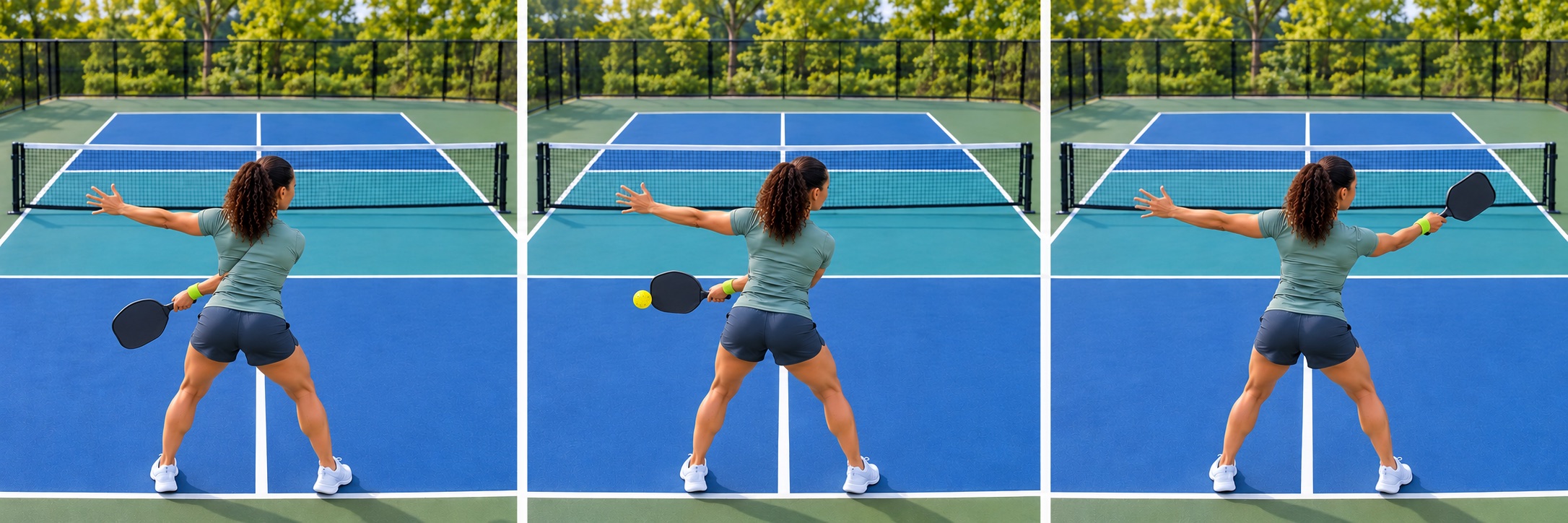
AI-generated movement study showing a fictional player from behind, facing the net. The lime band identifies the same right paddle wrist in every frame. Two-handed backhands add the bare left hand above the right on the handle. Use the written steps for technique and official rules for legality. Left-handed players reverse side-specific cues where appropriate.
Position, contact, recovery.
Where the movement starts
Create room on the side opposite your paddle hand. Turn early enough to bring the paddle across your body, rather than waiting until the ball reaches your feet. The net remains the direction of play even as your shoulders turn.
Read the contact
The illustrated player stays right-handed: her right arm carries the paddle across to her left for preparation and contact. The left hand remains free for this one-handed variation. The lime band follows the same right wrist through the finish.
Check it with a partner
Ask a partner to identify the gripping hand at preparation, contact and finish. Use slow bounce feeds and a generous middle target. If the arm feels cramped, adjust your feet and contact space instead of adding a late wrist flick.
Official court dimensions ↗Step by step.
- 01
Prepare the face early
Use a comfortable backhand grip and a modestly open face. Turn before the bounce gets too close. Keep the preparation shorter than a large tennis-style slice.
- 02
Travel through the ball
Guide a controlled forward path with a little high-to-low shape. Avoid a steep downward chop or last-second wrist scoop. Keep clearance over the net.
- 03
Recover into the point
Observe the depth and move towards your next position. Do not admire the spin or assume the opponent will miss. Settle as they strike their third shot.
When it goes wrong.
Floating the return short
Reduce the open face and send the path more through the target.
Using slice on an uncomfortable reach
Choose your reliable neutral return when spacing is poor.
Neutral and slice return comparison
A suggested BracketReady practice task. The counts are your observations, not a skill-rating test.
Set it up
A partner serves 20 comparable balls to your backhand; mark a deep target.
Do the work
Alternate five neutral returns with five slice returns. Count deep-target hits and note whether the different shape helps your recovery. Keep the two observations separate.
Count this
Slice returns reaching the same deep target. Record attempts and target hits using the same definition throughout.
Log this practice in Matchday ↗Sign in to save. Existing practice-log allowances apply. Log sessions you actually completed.Make it fit your level.
Use slow cooperative bounce feeds rather than serves.
Mix neutral and slice returns without announcing which one you will use.
Ask the server to play the third shot so you can compare the resulting positions.
Know what you are reading.
Original BracketReady explanation and practice design from the BracketReady learning desk, with the technique reference below. For individual technique feedback, work with a qualified coach.
Photo sequences use a consistent fictional player, wardrobe, equipment and court. Some guides share a relevant movement study; the written lesson explains the specific variation.
References checked 23 October 2026. Event rules and official updates take precedence.
Your next useful read.
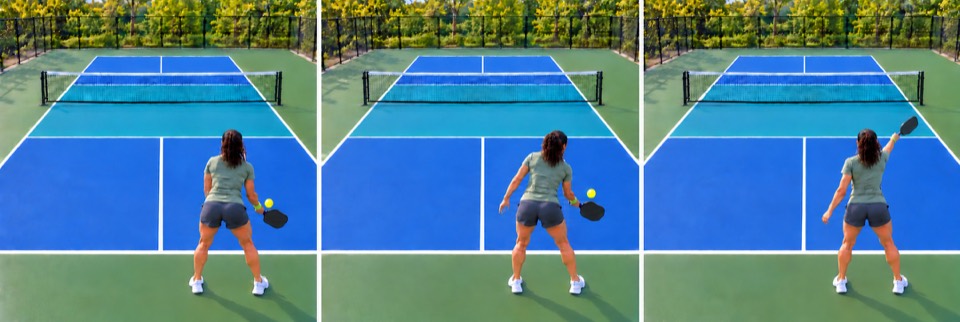
Build a repeatable underhand volley serve
Learn a simple legal volley-serve routine, comfortable contact and generous diagonal targets.
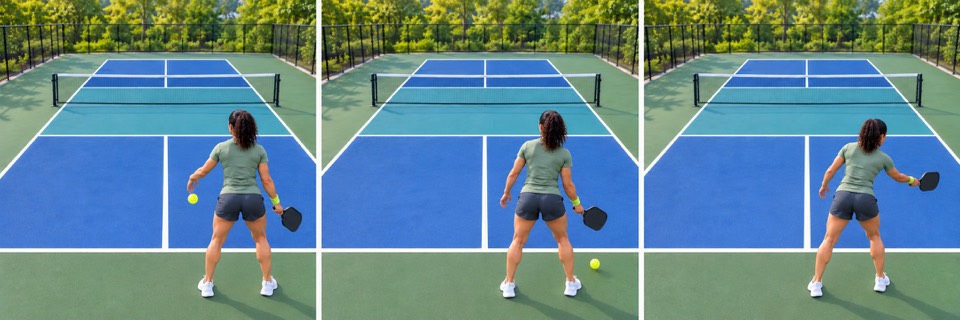
Use a drop serve without complicating the release
Practise the bounce-based serving option, legal release and contact timing with a repeatable routine.
Add serve depth before adding more speed
Use generous depth targets, controlled pace and a return-based observation to develop your serve.