Build a tournament week around one clear plan
Connect opponent context, partner tactics, familiar drills and a practical Matchday checklist.
Understand the job.
The days before an event are a chance to organise familiar skills and partnership decisions. Avoid using the final practice to rebuild every stroke. Choose a realistic schedule that suits your existing playing routine and recovery needs.
Ready-position movement study
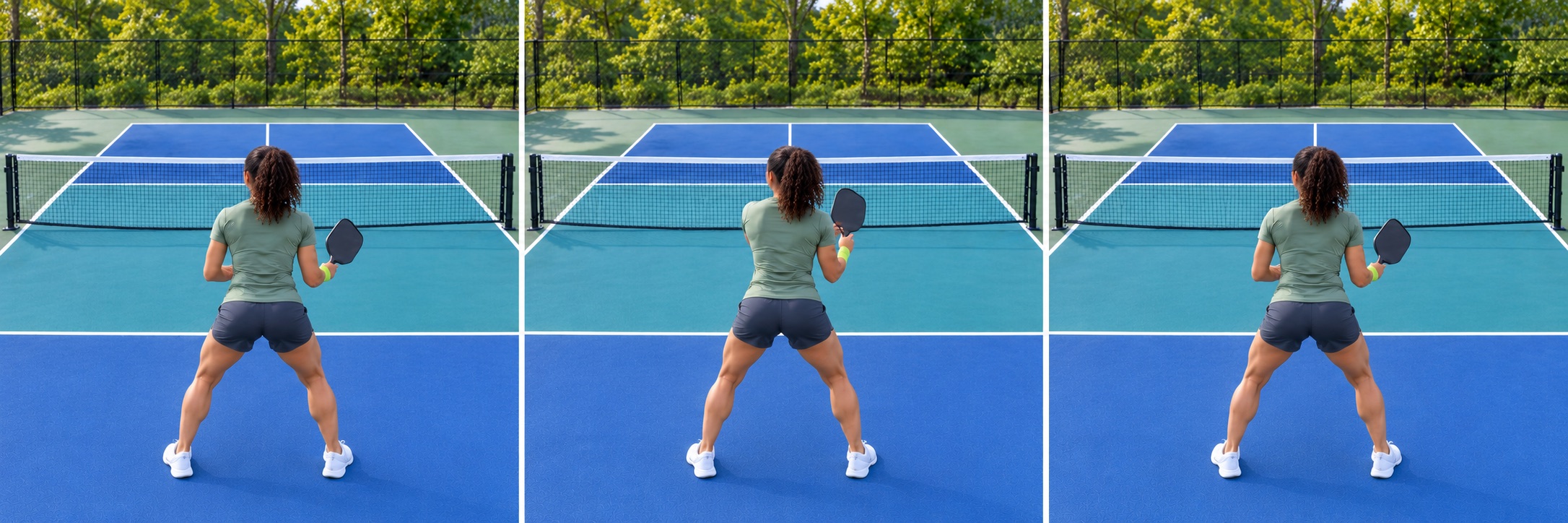
AI-generated movement study showing a fictional player from behind, facing the net. The lime band identifies the same right paddle wrist in every frame. Two-handed backhands add the bare left hand above the right on the handle. Use the written steps for technique and official rules for legality. Left-handed players reverse side-specific cues where appropriate.
Position, contact, recovery.
Where the movement starts
Face the net with room to move either way. At the kitchen, leave your shoes clear of the non-volley-zone line. A ready stance at the baseline can be lower and wider; do not copy one fixed paddle height for every situation.
Read the contact
Keep the paddle in the same dominant hand. A light touch from the other hand may support preparation without changing which hand grips the handle. Start with a comfortable handshake hold, then use gentle feeds to test both sides.
Check it with a partner
Ask a partner to alternate sides without warning. If you first have to untuck the paddle or uncross your feet, adjust your starting position. Readiness is the ability to respond, rather than a pose held for a photograph.
Official court dimensions ↗Step by step.
- 01
Check the event details
Confirm the official draw, scoring, venue time zone and schedule with the organiser. Select the correct opponent identities in your preparation brief and notice the dates and limits of available records.
- 02
Rehearse the partnership
Agree middle balls, serve and return targets, and a response to pressure. Practise one opening pattern and one defensive reset sequence at a manageable pace.
- 03
Keep the final checklist practical
Check permitted equipment, shoes, transport, food and water arrangements appropriate to you. Revisit the official schedule before travelling. Keep the day’s first-game intention simple.
When it goes wrong.
Inferring a technical weakness from a rating
Use actual observations or reliable scouting context.
Adding several unfamiliar shots at the last minute
Rehearse familiar patterns and save experiments for a later practice block.
Tournament opening rehearsal
A suggested BracketReady practice task. The counts are your observations, not a skill-rating test.
Set it up
Your partner, an event brief and a normal court.
Do the work
Play 12 realistic serve-return-third sequences using your agreed calls and targets. Count sequences where both partners follow the plan and recover for the next ball.
Count this
Rally starts where both partners follow the agreed plan. Record attempts and target hits using the same definition throughout.
Log this practice in Matchday ↗Sign in to save. Existing practice-log allowances apply. Log sessions you actually completed.Make it fit your level.
Walk the calls and positions before hitting.
Ask another pair to test the plan with live replies.
Add contrasting return depths and a pressure score.
Know what you are reading.
Original BracketReady explanation and practice design from the BracketReady learning desk, with the technique reference below. For individual technique feedback, work with a qualified coach.
Photo sequences use a consistent fictional player, wardrobe, equipment and court. Some guides share a relevant movement study; the written lesson explains the specific variation.
References checked 23 October 2026. Event rules and official updates take precedence.
Your next useful read.
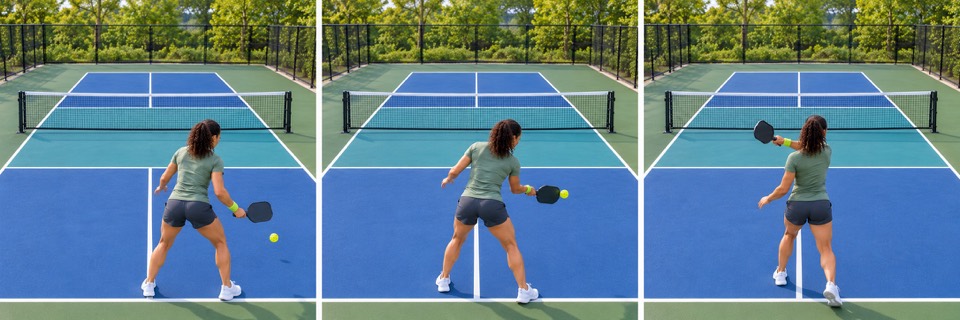
Use skinny singles as a purposeful practice game
Agree a half-court format and use constraints to rehearse placement, patience and recovery.
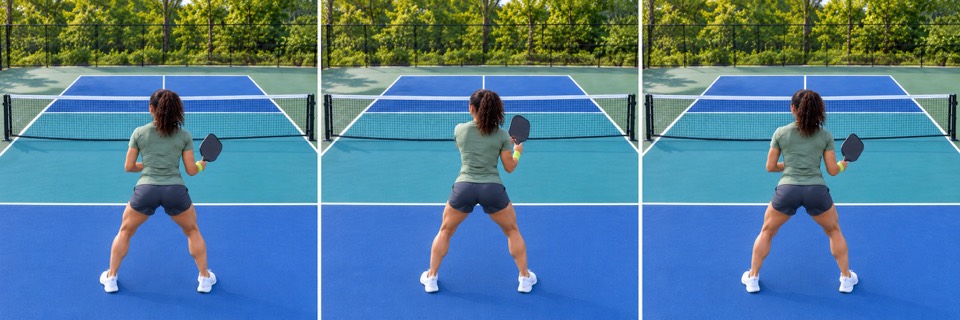
Warm up your strokes before testing your pace
Use a gradual ball-based routine, a court check and a shared intention before your first game.
Make wall practice transfer to a real court
Use safe spacing, a visible target and repeatable solo drills for control and recovery.