Pickleball for beginners: learn the court and your first shots
Start pickleball with the rules, grip, ready position, serve, return and soft game. Follow free beginner guides and a simple 30-minute partner session.
Choose a practice task ↓Start with the job of the shot.
You do not need a directory profile or a rating to begin learning pickleball. Start with the court, a comfortable paddle hold and the opening bounce decisions. Then build a legal serve, a controlled return and a few contacts on both sides before worrying about pace.
Use generous targets and a partner willing to feed gently. Short cooperative sets make it easier to see what changed. The beginner learning paths are editorial starting points rather than a test or an official skill classification. Move through them at a pace that fits your experience.
Build it in three stages.
- 01
Walk through a rally
Point out the baseline, kitchen line and service boxes. Rehearse a serve, return and third contact slowly, saying when the ball must bounce. Agree the scoring format before keeping score.
- 02
Create contact space
Try a comfortable grip and balanced ready position, then gentle forehand and backhand feeds. Keep enough room between paddle and torso. Recover before asking the partner to send the next ball.
- 03
Share a short session
Use the 30-minute beginner partner plan below. Rotate feeding roles, keep the pace comfortable and finish with one reliable habit to take into a game. Repeating an easier block is useful practice.
Understand the technique.
All coaching guides ↗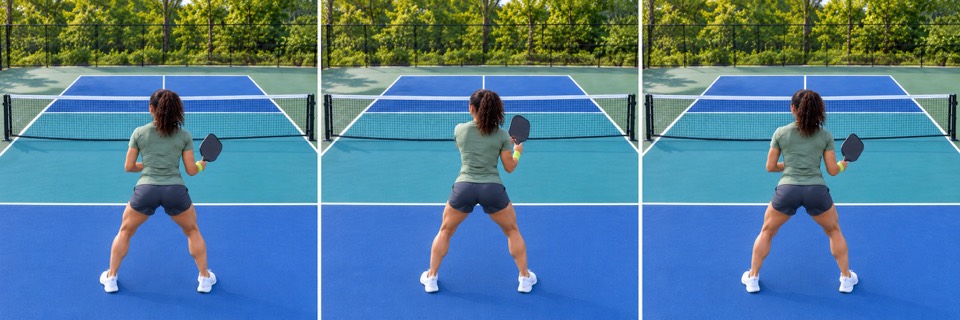
Your first game: the rules that keep play flowing
Learn the two-bounce rule, kitchen, serving sequence and traditional scoring with a simple on-court rehearsal.
Find a comfortable grip and ready position
Build a relaxed paddle hold, usable contact space and a balanced base for forehands, backhands and kitchen exchanges.
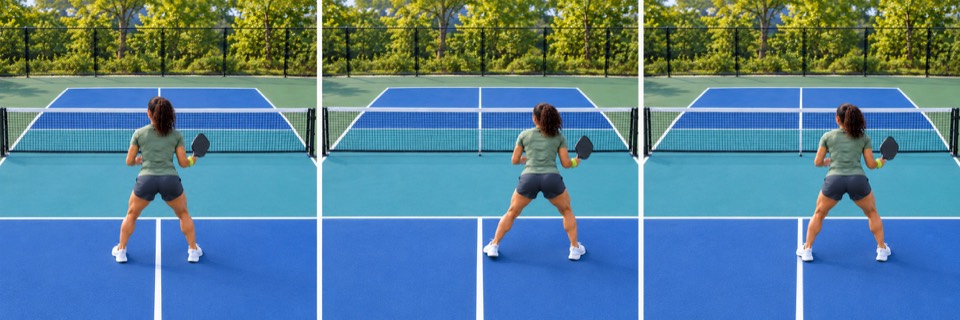
Footwork: arrive balanced for the next ball
Practise small adjustment steps, a modest split step and recovery without running through contact.
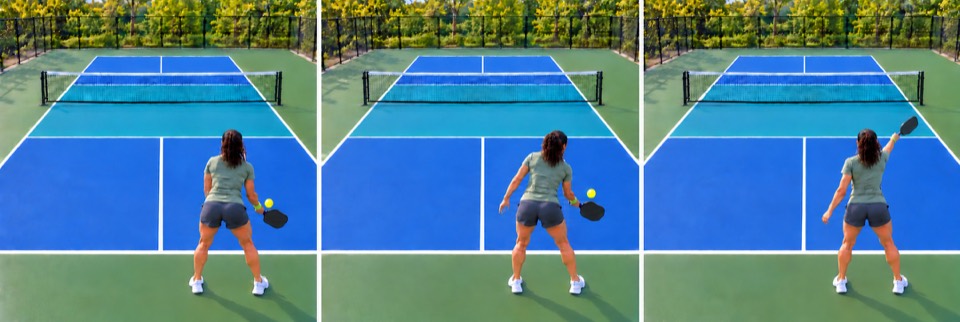
Build a repeatable underhand volley serve
Learn a simple legal volley-serve routine, comfortable contact and generous diagonal targets.
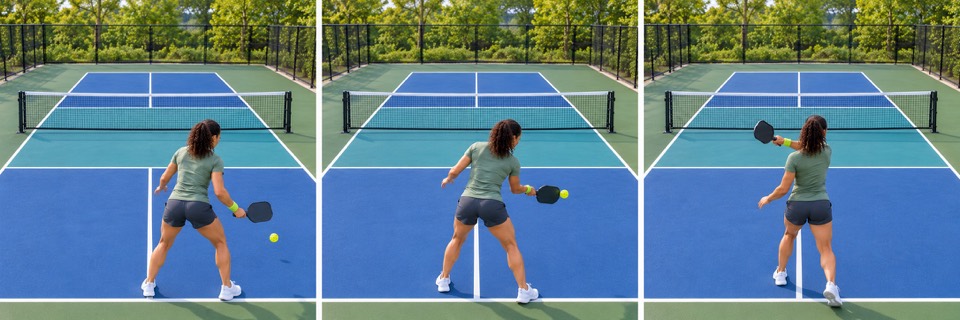
Return deep, then arrive ready
Use a compact return, a safe depth target and controlled movement towards your next court position.
A forehand groundstroke you can repeat
Create contact space, turn comfortably and finish towards a broad target before increasing drive speed.
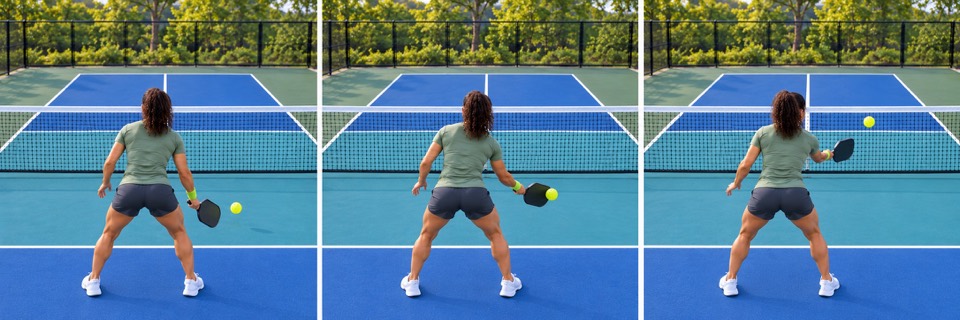
A forehand dink with shape and patience
Learn a compact soft contact, usable net clearance and recovery at the kitchen line.
Take it into practice.
All improvement drills ↗Improve your footwork
Make the next contact easier by arriving with room and balance. This partner task progresses from predictable small adjustments to reading a modest change in direction.
Improve your serve
Build a serve you can trust at the start of a close game. This partner session separates a legal, repeatable start from the temptation to chase speed. Keep the target broad enough to show whether your routine is working.
Improve your return of serve
Practise a deep, controlled return that gives you time to move. The purpose is a useful start to the receiving rally, with enough margin to survive a different serve.
Improve your forehand
Use predictable bounce feeds to find space for your forehand, then add a real recovery. Keeping the same landing target makes it easier to see whether a change in preparation actually helps.
Improve your forehand dink
Build a soft forehand exchange you can repeat, then add a small change of placement. Your partner’s job is to make a useful bounce available, rather than win the drill.
Make room for a full session.
30-minute beginner partner session
A simple shared practice for a legal serve, comfortable groundstrokes and a cooperative soft game.
First games / beginnerOpen timed session ↗Questions players ask.
Do I need a DUPR rating before I practise?
No. These guides, drills and timers are free to use without a rating or account. Create an account when you want to keep private practice notes in Matchday.
What should I learn first?
Learn the court and opening bounce rules, then a repeatable legal serve and comfortable contacts on both sides. Keep targets broad and add a cooperative kitchen exchange before chasing more difficult shots.
Original practice. Clear references.
Curated by the BracketReady learning desk. Technique guides link the relevant primary references and explain common mistakes. Practice designs and learning paths are editorial suggestions, not official ratings or coaching certification.
Editorial standards and corrections ↗