Pickleball backhands: one hand, two hands and the soft game
Find the right backhand practice for a groundstroke, two-handed contact, dink, drop or flick. Compare technique and use specific partner drills.
Choose a practice task ↓Start with the job of the shot.
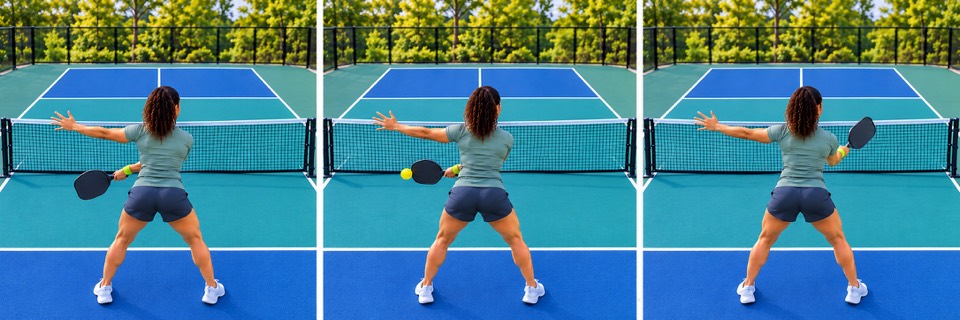
A backhand is played on the side opposite the paddle hand. It does not require swapping hands. For the right-handed player in our movement studies, the right arm crosses towards the left for preparation and contact; a two-handed variation adds the left hand above the right on the handle.
Different backhands solve different jobs. A baseline groundstroke needs room and timely preparation, while a dink or block uses a smaller movement. Choose a comfortable one- or two-handed option for the ball and reach available instead of forcing the same technique into every situation.
Build it in three stages.
- 01
Establish comfortable spacing
Use slow bounce feeds to a broad middle target. Prepare early and meet the ball in front. Notice whether a miss came from a crowded contact, a late turn or an unstable face before changing several things.
- 02
Compare the options fairly
If exploring two hands, use a handle and grip with enough comfortable space. Compare against the same feed and target. Keep a one-handed defensive reach available when two hands would force a strained position.
- 03
Transfer to the short game
Move to cooperative backhand dinks, then a soft drop or manageable volley. Keep the paddle in the same dominant hand and adjust the size of the motion to the job. Recover where either side is available next.
Understand the technique.
All coaching guides ↗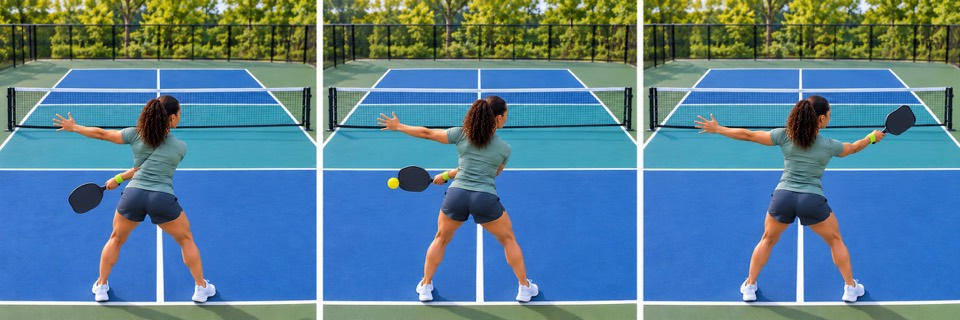
Make the one-handed backhand a real option
Use early preparation, comfortable backhand spacing and a measured finish to stop avoiding that side.
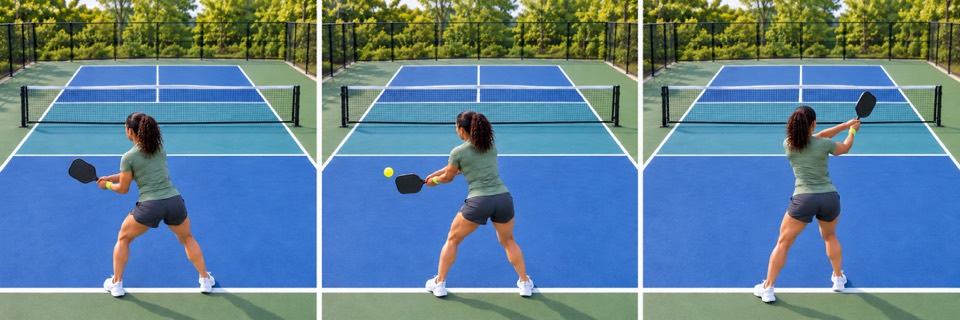
Build a comfortable two-handed backhand
Explore two-handed preparation, contact space and recovery without forcing an uncomfortable grip or losing reach.
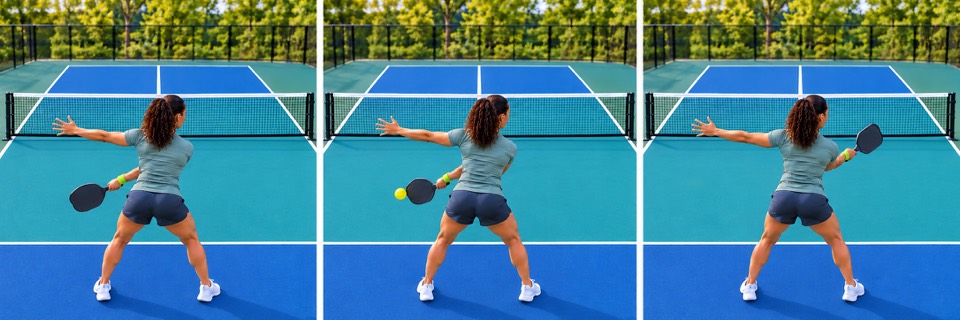
Build a backhand dink you trust
Keep backhand kitchen contacts compact with early preparation, room beside the body and a quiet finish.
Give the backhand drop its own practice time
Develop a compact backhand drop so deep returns do not force you to run around every ball.
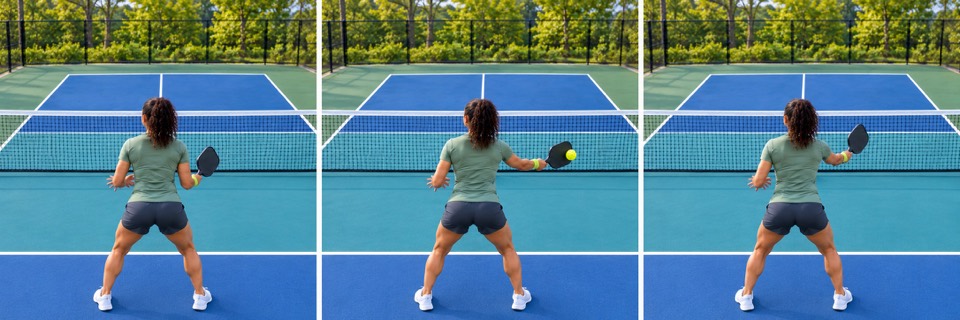
Use a compact punch volley with a clear target
Redirect a comfortable higher ball with a short forward action and quick paddle recovery.
Introduce the backhand flick carefully
Explore a short backhand acceleration from a manageable ball while retaining a reliable block and recovery.
Take it into practice.
All improvement drills ↗Improve your backhand
Give the one-handed backhand its own repetitions instead of avoiding it. This session keeps the paddle in your dominant hand and builds from a comfortable contact to a choice between both sides.
Improve your two-handed backhand
Test whether two hands give you a comfortable, repeatable contact. Use cooperative feeds so the second hand supports a coordinated turn rather than hiding poor spacing.
Improve your backhand dink
Practise the backhand kitchen contact without stepping around every ball. A slow cooperative exchange lets you establish space beside the hip before you add depth or width.
Improve your backhand drop
Give the soft backhand a repeatable contact window before attempting it from the full baseline. A controlled target is more useful than a last-second scoop from a crowded bounce.
Improve your punch volley
Add a measured backhand punch to a ball that permits it. The feeder should help you recognise when a block is the better option rather than reward a big swing at every volley.
Improve your backhand flick
Use a predictable feed to establish a compact backhand attack, then practise leaving unsuitable balls soft. Keep the dominant hand on the paddle throughout the crossing action.
Make room for a full session.
30-minute beginner partner session
A simple shared practice for a legal serve, comfortable groundstrokes and a cooperative soft game.
First games / beginnerOpen timed session ↗Questions players ask.
Do I need a two-handed backhand?
It is an option rather than a requirement. Test comfort, spacing and control with gentle comparable feeds. A qualified coach can help with grip choices and when to use a one-handed reach.
Why do I keep getting jammed on the backhand?
Late preparation and insufficient room can both crowd the contact. Slow the feed, turn earlier and use your feet to create space before experimenting with a larger swing.
Original practice. Clear references.
Curated by the BracketReady learning desk. Technique guides link the relevant primary references and explain common mistakes. Practice designs and learning paths are editorial suggestions, not official ratings or coaching certification.
Editorial standards and corrections ↗